

LNG TRANSPORTATION AT A GLANCE
Worldwide, the demand for natural gas is increasing, making it one of the most precious resources in today’s world. Technological advancement of converting natural gas into liquid form enables greater flexibility to the gas market. Liquefied natural gas (LNG) is easier and safer to transport worldwide as compared to it in gaseous form, allowing countries to expand their energy sources and shift towards cleaner energy.
The transportation of LNG refers to the movement or shipping of natural gas in liquid form. The two means of transporting natural gas are through pipeline and a sea-going vessel. Initially, natural gas was transported in a highly pressurized condition through a complex network of pipelines. With the increase in demand for natural gas, the majority of the worldwide LNG exports now take place at an intercontinental level, where shipping LNG across the ocean is often required.
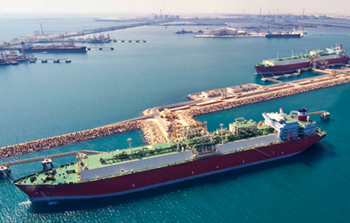
Nakilat, owning the largest LNG carrier fleet in the world, transports enormous quantities of LNG to more than 90 terminals in over 26 countries. Our Q-Max and Q-Flex are the world’s largest types of LNG vessels, carrying up to 80% more capacity than conventional vessels.
But before the process of LNG transportation, how is natural gas extracted and liquefied?
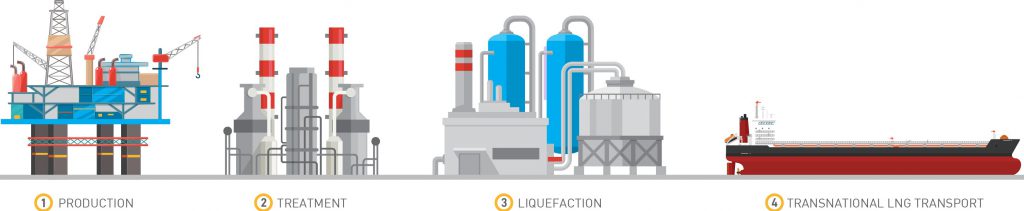
- Extraction of natural gas from the earth’s surface is the first step along the process chain
- The extracted natural gas is then treated inside the liquefaction plant
- Following the removal of most contaminants from the gas, the treated natural gas advances within the facility to start the liquifying process for transportation
- The final step in the LNG process chain is transporting the liquefied natural gas to the customer
LET’S EXPLORE WHAT AN LNG LOADING/UNLOADING PROCESS ENTAILS!

VESSEL PREPARATION
In order to transport natural gas through shipping, the process begins with liquifying the gas by cooling it to approximately -161.5 °C.
The vessel arrives at the load terminal in ‘cold condition’ to receive the cargo.

LOADING
After the reliquefication process, ship shore arms/loading arms will be connected, and the LNG will be pumped from an onshore tank through cryogenic pipelines into the vessel tanks.The pumped LNG flows at a controlled rate.
If the vessel is in ‘cold condition’ , the process usually takes less than a day. Alternatively, charterers may request vessels to return in ‘warm condition’, which results into additional time required to cool tanks before starting the loading process.

UNLOAD CARGO
The vessel arrives at the discharge port. Discharge arms are connected to the vessel and the cargo will be pumped ashore using the vessel’s pumps.
As the LNG is being pumped ashore, gases will return to the vessel’s tanks.The cargo quantities at the discharge port is defined by the receiver and an independent surveyor is used as third party verification.
KEY WORDS
| COLD CONDITION | Vessel must retain approximately 700m3 of cargo to keep the tanks cold |
| WARM CONDITION | When the vessel is not carrying any cargo |
| BALLAST PASSAGE | Vessel is not loaded during voyage |
| LOADED PASSAGE | Vessel has cargo loaded during voyage |
DID YOU KNOW?
A Q-MAX VESSEL CAN CARRY ENOUGH LNG TO MEET THE NATURAL GAS NEEDS OF
140,000 HOMES FOR A YEAR!
FUN FACTS!
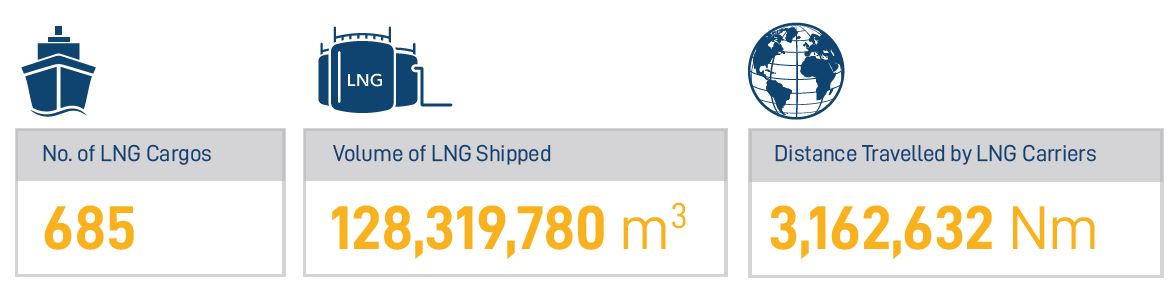
2018 NAKILAT LNG HIGHLIGHTS:
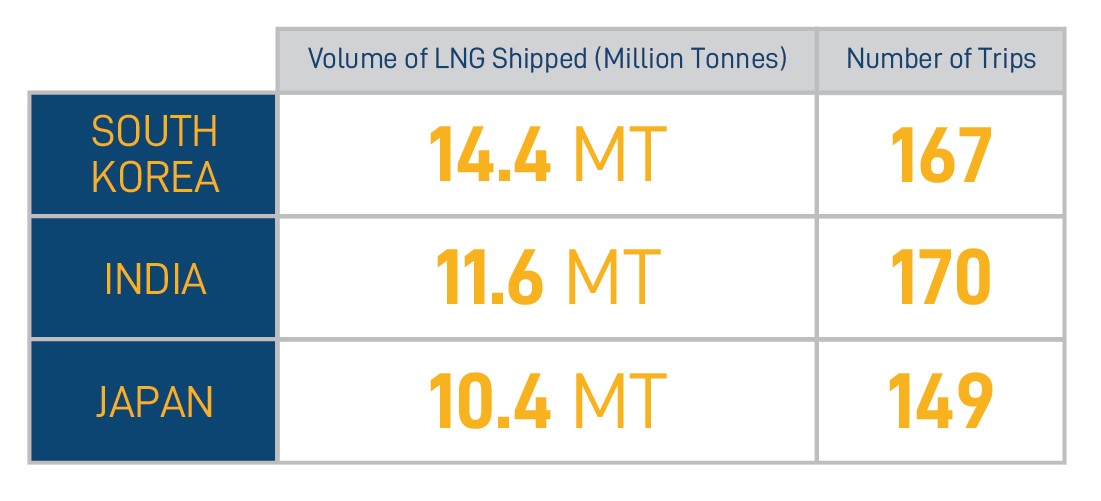
TOP 3 DESTINATIONS OF QATARI LNG IMPORTS (2018):